
Gameboy Advance, Modding, Retro Gaming
What Makes a High Quality Custom Game Boy? A Buyer’s Guide
Jun
What Makes a High Quality Custom Game Boy?
Table of Contents
For many buyers, a custom Game Boy starts with appearance. Like a really cool shell, custom artwork, matching buttons, and a backlit screen are usually what grab attention first.
There is nothing wrong with that. A custom Game Boy should look great.
The problem is that appearance tells you very little about the quality of the build itself.
Two custom Game Boys can look nearly identical in photos while being built to completely different standards internally. One may provide years of reliable use. The other may develop problems after only a few months.
If you’re shopping for a custom Game Boy, understanding what separates a high-quality build from a low-quality build can help you make a better purchasing decision and avoid expensive surprises later.
The Most Important Part Is the One You Can't See
The shell, buttons, and screen are all aftermarket parts that can be replaced relatively easily, but the motherboard is different.
Every original Game Boy Advance and Game Boy Advance SP motherboard was manufactured by Nintendo more than twenty years ago. No new original motherboards are being produced.
That means every custom Game Boy starts with a used motherboard.
The condition of that motherboard often has a greater impact on reliability than any cosmetic upgrade.
Before a custom GBA is ever assembled, the motherboard should be inspected for:
- Corrosion
- Liquid damage
- Broken traces
- Previous repair attempts
- Damaged cartridge readers
- Damaged battery contacts
- Power switch wear
- Audio issues
A builder who starts with a healthy motherboard is setting the foundation for a reliable handheld.
On the other side of the coin, the builder who ignores these issues may create a console that looks fantastic but develops problems later.
Refurbishment Matters
One of the biggest differences between a budget build and a premium build is often the amount of refurbishment performed before assembly.
Many original Game Boys have spent decades sitting in attics, garages, storage containers, and closets. Dirt, dust, oxidation, and contamination build up over time.
A proper refurbishment process may include:
- Motherboard cleaning
- Cartridge slot cleaning
- Battery terminal cleaning
- Button contact cleaning
- Speaker replacement when necessary
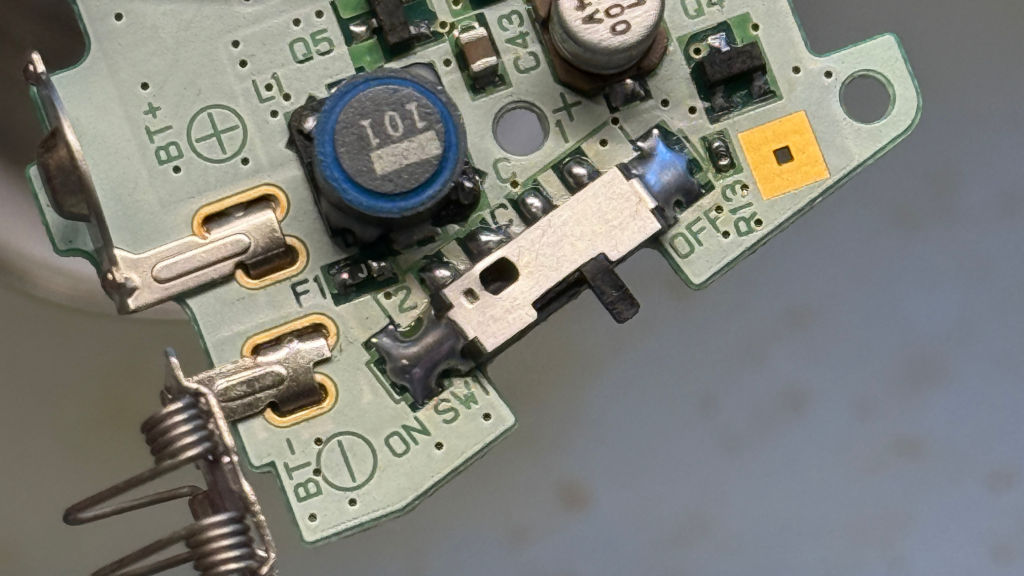
- Power switch servicing and replacement – see image below
- Testing all functions before modifications begin
These steps are not exciting.
They do not create flashy photos and soldering is a skill that budget builders simply don’t care about when they sell cheap.
They also happen to be some of the most important steps for long-term reliability.
The Quality of the Soldering Matters
Most buyers never open their GBA after purchasing it.
Because of that, poor soldering often goes unnoticed until something stops working.
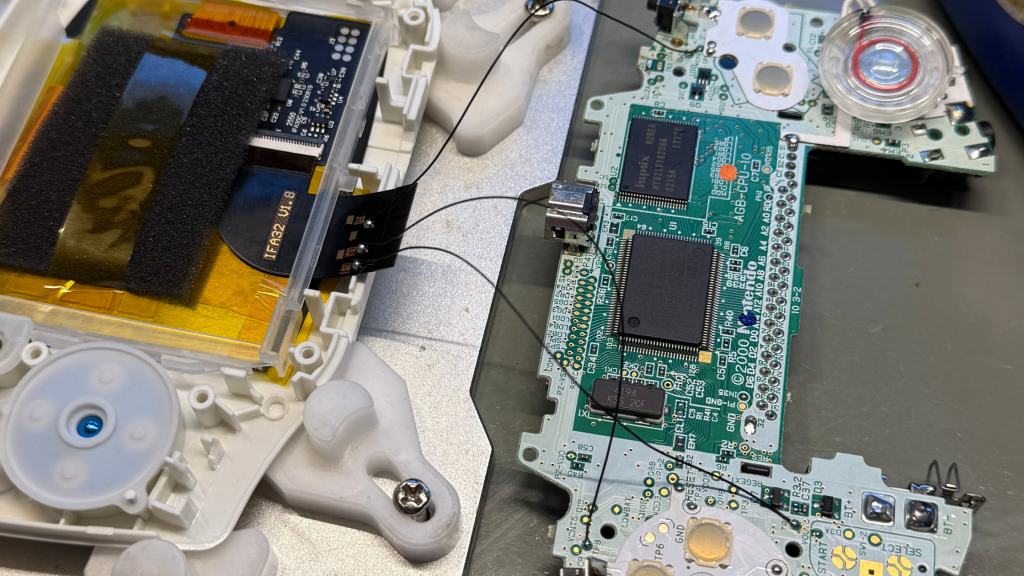
A high-quality custom Game Boy should have:
- Clean solder joints
- Proper wire routing
- Secure connections
- Appropriate strain relief
- No loose wiring
- No excess solder splatter
Good soldering isn’t about making something work today.
It’s about making sure it continues working months or years later.
When modifications such as USB-C charging, audio amplifiers, LED kits, power cleaners, and rechargeable batteries are installed, the quality of the soldering becomes even more important.
If your builder doesn’t show the work “under the hood”, you need to ask yourself why!
Not All Screens Are Installed The Same
Modern IPS screens are one of the best upgrades available for the Game Boy Advance. The difference between an original frontlit screen and a modern IPS display is night and day.
However, the screen itself is only part of the equation. Installation quality matters just as much.
A properly installed IPS screen should:
- Sit evenly in the shell
- Remain secure during normal use
- Be free of visible dust beneath the lens
- Display a clean image
- Function consistently
- Hardwired screen controls
One detail many buyers don’t know to ask about is how the screen brightness controls are installed.
Many IPS kits include touch sensors that allow brightness adjustments by tapping certain areas of the shell. While these touch controls are quick and easy to install, they can also be accidentally triggered during gameplay or while handling the console.
For that reason, I prefer hardwired brightness controls whenever possible. Hardwiring the controls directly to button combinations creates a cleaner user experience and eliminates the need for touch sensors hidden inside the shell.
It’s a small detail, but it’s one of those decisions that separates a thoughtfully built Game Boy from one that was assembled as quickly as possible.
Dust trapped beneath a screen lens is another common issue buyers encounter. Builders who take their time during installation typically produce cleaner results and are less likely to have customers dealing with cosmetic issues after delivery.
Shell Quality and Fitment Matter More Than Most People Realize
Many buyers assume all aftermarket shells are identical. They are not!
Aftermarket shell quality varies significantly between manufacturers.
Differences can include:
- Plastic thickness
- Mold quality
- Button fitment
- Screw post strength
- Surface finish
- Color consistency
Poor fitment results in these problems:
- Sticky buttons
- Uneven seams
- Loose components
- Excessive flex
A high-quality build pays attention to how all of the components work together rather than simply installing parts as quickly as possible.
The Builder's Testing Process Is Extremely Important
One question buyers rarely ask is:
“What testing was performed before shipment?”
Testing is often the difference between a console that arrives ready to play and one that develops problems immediately.
A thorough builder will test the four major areas of function:
Power Testing
- Multiple power cycles
- Battery testing
- Charging verification
Audio Testing
- Speaker testing
- Volume wheel testing
- Headphone testing when applicable
Gameplay Testing
- Cartridge reading
- Save functionality
- Button response
- Extended gameplay operation
Screen Testing
- Brightness adjustment
- Pixel inspection
- Stability testing
The more extensive the testing process, the greater the likelihood that potential issues are identified before the console reaches the customer. It is my personal mantra as a builder that I only want to see a build on my workbench ONCE and ONCE only. I cover every base I can so that when a console is delivered, it’s 100% functional and operates as intended!
Reliability Is More Important Than Feature Content
One mistake many buyers make is assuming that more upgrades automatically create a better Game Boy. That is not always true.
A carefully assembled Game Boy with a quality IPS screen and a properly refurbished motherboard may provide a better ownership experience than a console packed with every available modification.
Every modification adds complexity.
Every additional component introduces another potential failure point.
The best builders understand how to balance features, reliability, and long-term serviceability. Personally, my workshop is only stocked with the components that I know work together well and provide that top level of function, without sacrificing any long-term reliability!
Support After the Sale Matters: 100-Day Warranty
A custom Game Boy is not the same as purchasing a brand-new product from a major electronics company.
These are modified handhelds built using original Nintendo hardware that is often more than twenty years old.
Eventually, repairs may be necessary.
When comparing builders, ask:
- Is there a warranty?
- What does the warranty cover?
- How are repairs handled?
- Is support available after delivery?
- Can replacement parts still be sourced?
A builder who stands behind their work provides value that extends far beyond the initial purchase.
I stand behind every build with a 100-Day Warranty covering hardware and functional defects. Every Game Boy is built, tested, and inspected by hand before it leaves my workbench. When you choose one of my consoles, you’re trusting me with your hard-earned money, and that’s something I don’t take lightly. My goal is simple: build a Game Boy you’ll be excited to play for years to come!
Questions Every Buyer Should Ask Before Purchasing a Custom Game Boy:
Before placing an order, you should ask your potential builder these questions:
- Is the original motherboard refurbished before assembly? How?
- Is the power switch cleaned or serviced?
- What testing is performed before shipment?
- What warranty is included?
- What screen is being used?
- What shell manufacturer is being used?
- Are replacement parts available in the future?
- How are warranty claims handled?
The answers can reveal a great deal about the quality standards behind the build. If you’re builder can’t answer these, look somewhere else.
FAQ Section
Are all custom Game Boys built the same?
No. Two consoles may appear similar externally while having significant differences in refurbishment quality, installation quality, testing procedures, and long-term reliability.
Why are some Custom Game Boys more expensive than others?
Price differences often reflect labor, refurbishment standards, component quality, testing procedures, warranty coverage, and post-sale support.
How do I know if a custom Game Boy is high quality?
Look for evidence of motherboard refurbishment, clean workmanship, thorough testing, quality components, and a clear warranty policy.
Is an IPS screen the most important upgrade?
For most players, an IPS screen provides the largest improvement in everyday usability, but overall build quality remains more important than any single upgrade.
How long should a custom Game Boy last?
A properly refurbished and maintained custom Game Boy can provide many years of reliable use, though all original Nintendo motherboards are vintage electronics and may eventually require service.
Final Thoughts
The best custom Game Boy is not necessarily the one with the most upgrades or the most expensive parts. It is the one that combines quality components, careful workmanship, thorough testing, and reliable support.
The reality is that most of the work that makes a custom Game Boy great happens long before the final photos are taken.
Refurbishing original hardware, inspecting motherboards, testing functionality, servicing worn components, and ensuring everything works together properly is rarely visible from the outside.
But those are the details that often determine whether a custom Game Boy remains reliable for years to come. ✌️